







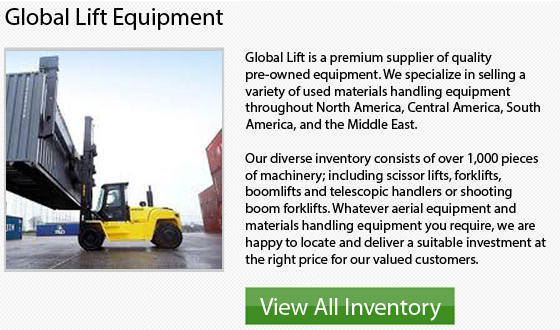
There are times it pays to examine the process of selecting a forklift. Like for example, does your company consistently select the same models for your dock work? If so, you can potentially miss out on a more efficient truck. There can be other models on the market which enable more to get accomplished because they provide less fatigue to operators. You may be able to take advantage of loading trailers in a more effective way. By doing some research and evaluation, you could determine if you have the best machinery to suit all your needs. By reducing operator fatigue, you could drastically increase your performance.
Some of the key factors to think about when determining forklift units which address specific concerns consist of:
Trailer Loading Frequency:
You probably won't need a pricey forklift to complete jobs if your shipping and receiving department loads just a few semi-trailers or box trucks per week. An inexpensive walkie unit or walkie-rider would be able to handle the task if: You are not required to stack loads inside the trailer, and a 4500 to 6000 lb. capacity is adequate. Last but not least, you must consider whether or not the transition to the dock leveler from the dock floor and into the trailer is not too jarring for the operator since the small load wheels have to travel over the dock plate.
If your shipping facility is consistently loading trailers however, a stand-up end control unit could make more sense over a walkie-rider or a walkie model. These battery-powered forklifts fit into a standard 108 inch trailer door with no trouble. Their masts allow in-trailer stacking. These forklifts provide a model capacity range from 3000 to 4000 lbs.
Operator Duties:
For material handling requirements, each business has a slightly different system. Some forklift operators would usually unload and load products in the shipping department as well as storing items on inventory racks, replenish the manufacturing line, handle the paperwork associated with the loads, attach and scan bar codes and other jobs. Normally, the forklift operators who are always on and off of their lift trucks in their shifts find it much quicker and less tiring to exit a stand-up control unit, rather than a sit down kind.